AI Harnesses and Human Hierarchies
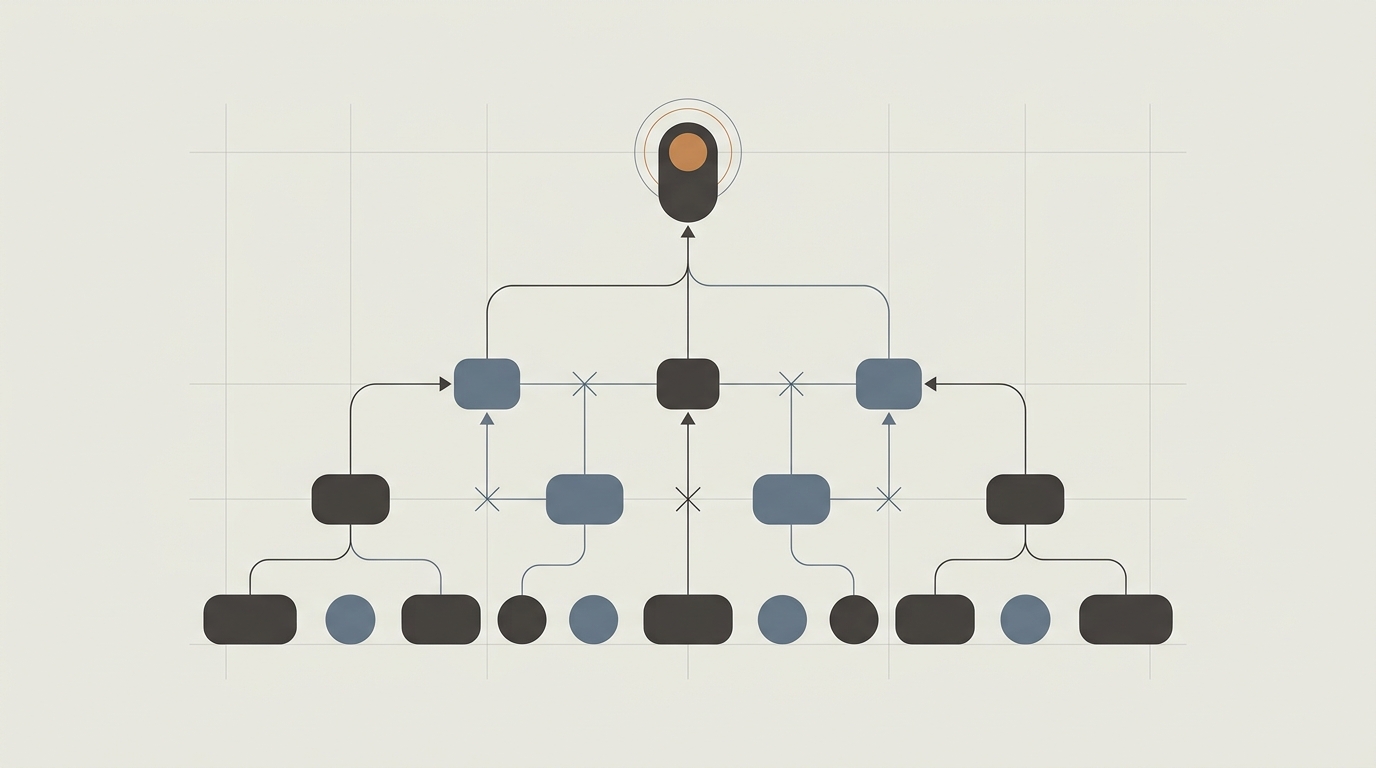
Much of current AI harness and multi-agent architecture is inspired by human workplace hierarchies, which have gone through rounds of refinement over the past decades. This trend is likely to continue.
You can see this across plenty of everyday workplace setups:
- Escalation and cross-validation: A team of junior software engineers might hunt for bugs and cross-validate their findings with one another before escalating an issue to a senior engineer if it is serious enough.
- Managers and specialists: A lead breaks a big project into smaller tasks, delegates each piece to a specialist (frontend, backend, design, or QA), and puts the results back together without having to watch every step.
- Writers and reviewers: One person drafts the code or article, and a separate reviewer checks it with fresh eyes, because the person who wrote something is usually the worst person to catch their own mistakes.
- Analysts and decision-makers: In investing or law, junior analysts read through hundreds of pages of filings or documents and write up a short memo, so the partner or portfolio manager only has to weigh the key facts and trade-offs.
There is a practical reason this keeps happening. Human organisational structures (specialist roles, peer review, clear escalation paths, and separating the person who proposes work from the person who verifies it) evolved to manage limited attention, catch blind spots, and conserve scarce senior judgement. Those are the exact same constraints we run into when orchestrating hierarchical agents or pairing a frontier harness with smaller models.
Context windows make this even clearer. Even though models now advertise 1-million-token context windows, actually filling them up is impractical because of cost (not to mention slower responses and worse focus). So harnesses have to compact the conversation along the way, summarising or dropping earlier steps to stay within budget. The catch is that compaction is always lossy, and important details can easily get lost in the summary. Splitting the work across smaller, focused agents and only passing verified findings up the chain avoids cramming everything into one giant context, much like how a good team keeps any one person from being overwhelmed.
Impact is not always a function of how smart the leader is. It depends much more on how an organisation works together to solve a well-defined goal. CEOs and executives are often not the smartest people in the organisation (even setting aside how intelligence is defined), yet what matters is their ability to coordinate different teams and align incentives towards a common vision. You do not need a room full of Einsteins to build something as complex as a modern smartphone or an airliner; you need capable specialists and a structure that lets them work towards the same goal. The same likely holds for AI: a good harness coordinating several models towards a clear goal can often outperform a single smarter model working alone.
Until we get an AGI that can independently determine the optimal allocation of workers, we might be better off constructing our agent swarms ourselves, or giving our lead agent ideas from existing hierarchies so it can spawn agents with roles and responsibilities along the way (at runtime).